
spring tide
a week in Cornwall

I arrived in Falmouth for dog-sitting on September’s full moon. This meant the onset of the spring tide, when there are greater extremes between high and low water (also occurring after a new moon). Around mid-afternoon, ferry crossings over to the villages of Flushing or St Mawes were postponed because the water would be too low.
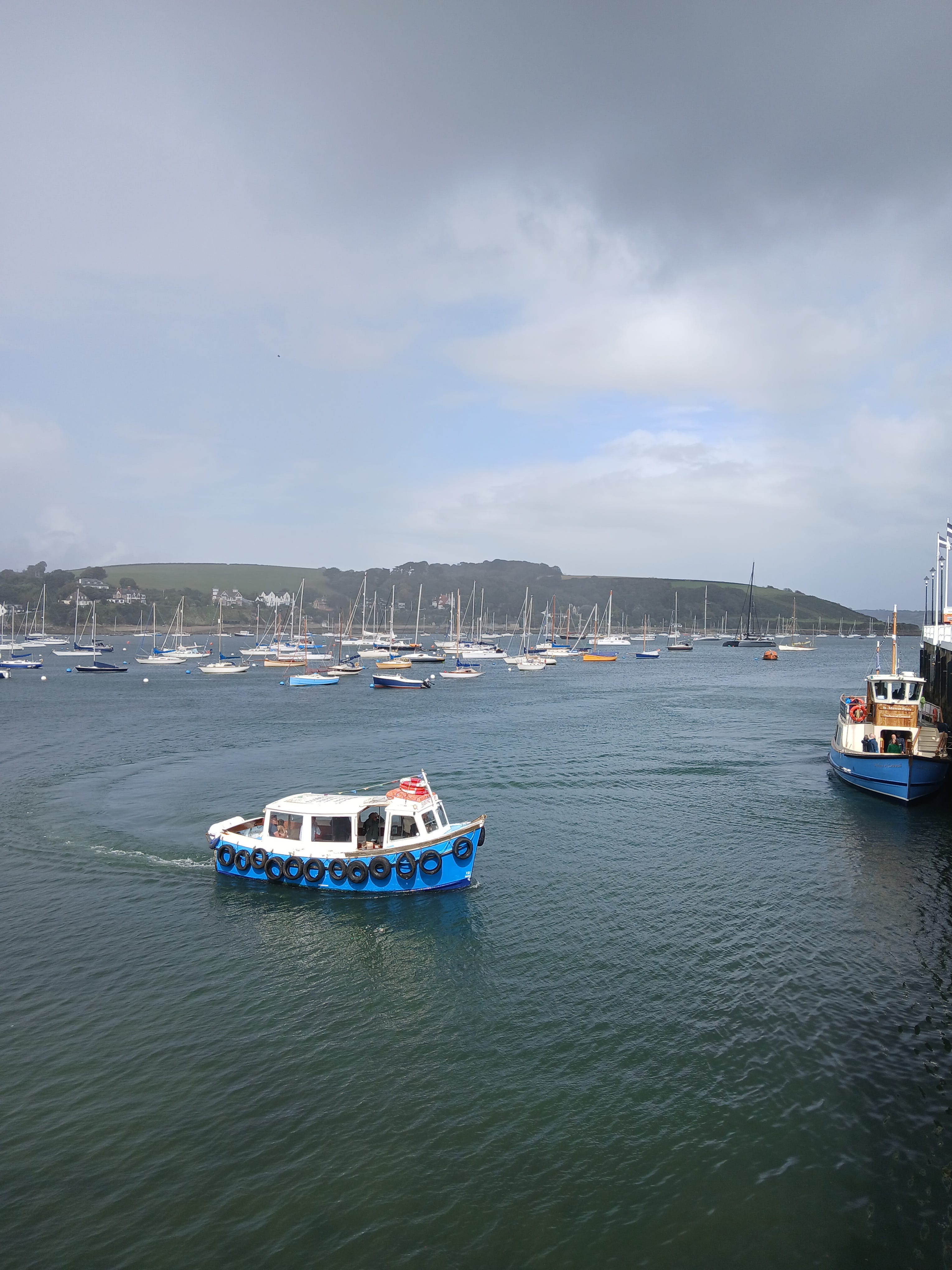
Mordros, as the Maritime Museum’s exhibition on surfing informed me, is the Cornish word for the constant sound of the sea here. What I loved most about being near the sea was its nearness. It seemed to appear in every window frame, studded with boats. Every lane ended in steps leading down to the water. Every breeze salted the air. There was more weather in the weather. I was monitoring the wind and checking the tide times, waking up early enough to see scraps of night and sunrise in the sky. On walks my waterproof was repeatedly soaked in rainstorms and then dried by the sun. The ground was wave-formed: uphill then downhill, over and over.
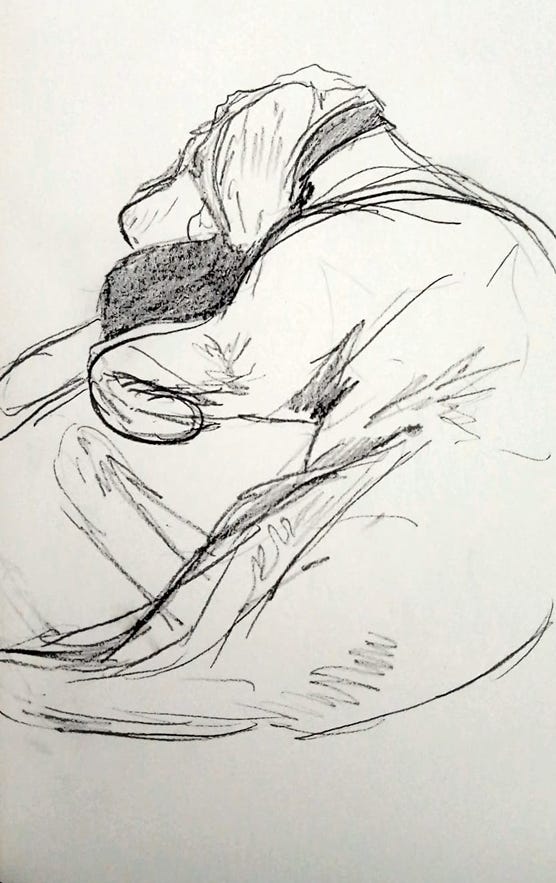
The nearest park where I would walk the dog looked out over the harbour and towards Flushing (from the Dutch Vlissingen, after the engineers who built its quays). One moment the view was hazed by mist, appearing like a hastily rubbed out pencil sketch. A few minutes later and the air would clear once more.
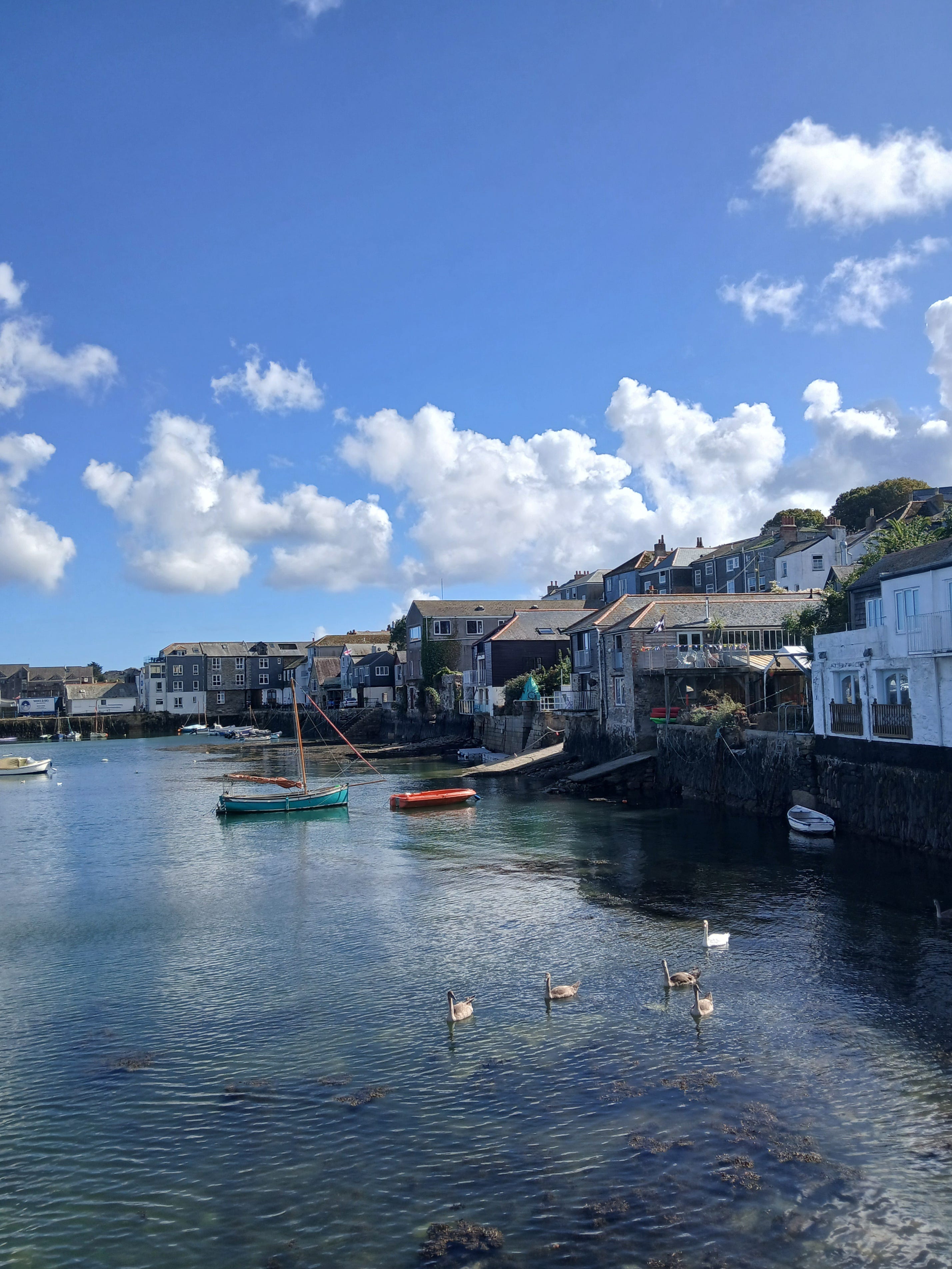
Where I walked
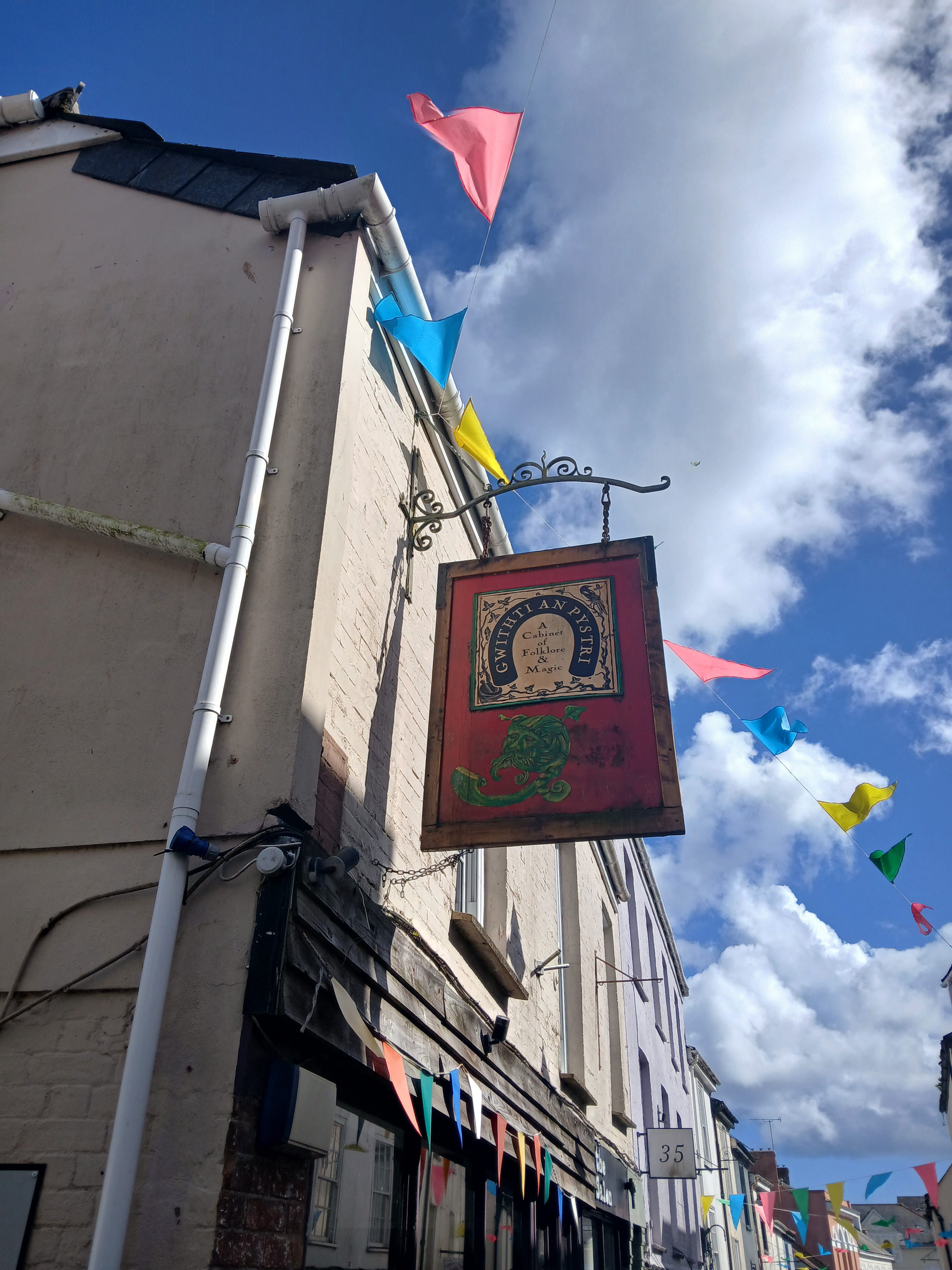
The town was full of bakeries, antiques markets, cafes, and secondhand booksellers. There were flyers in local shop windows for things like morris dancing and folk-techno nights. Near the top of the High Street I went into the Museum of Magic & Folklore (Gwithti An Pystri), where the proprietors have hung two faux-Holbein portraits of themselves next to the ticket booth. There I learned about Cornish piskies and the story of the Mermaid of Zennor (a village nearish to St Ives). A mysterious woman would attend church but never age and loved to listen to the choir’s singing. Eventually she ran away with the best and handsomest chorister before being spotted in her true mermaid-shape some time later.
I tried to take the ferries as much as possible because I’ve always enjoyed reaching places across water. There were also extensive coastal paths, which meant I often had the opportunity to hail my own ghost from a distance, seeing across the water a portion of land where I had walked the day before.
At St. Mawes there was a Holy Well in the middle of one of the streets close to the pier. It was covered over by wooden doors but if you leaned in close you could hear the sound of the trickling water. There’s another well at St. Mylor’s Church, which also has an impressive Cross, possibly a repurposed monolith from the pre-Christian era. I walked over there from Flushing, taking some time to fill my pockets with some of the early-ripened sloes in the hedgerow (to make sloe gin for Christmastime).

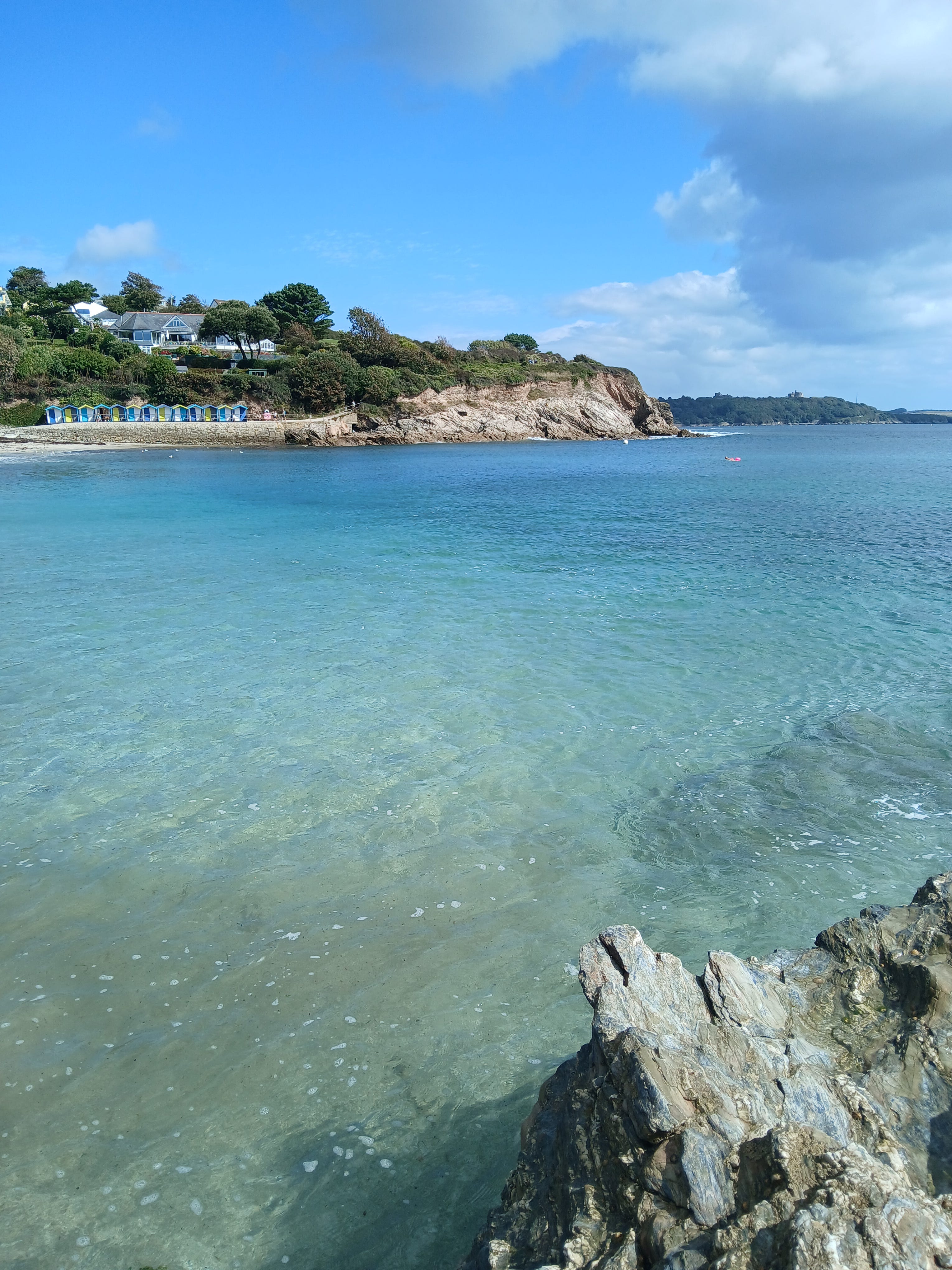
The Saturday before I was due to leave was a day of lasting sunshine and I went for a walk that included the nearby Swanpool and Maenporth beaches. The sea held that tropical shimmer.
What I read
The Lost Folk (2025) by Lally MacBeth
I bought Lost Folk from one of Falmouth’s bookshops early in my stay. The book exhorts the reader to collect, revive and create folk culture and customs, from tea towels to public parades. Acknowledging that what constitutes folk is hard to define, MacBeth lists three vital elements: the mark of the human hand, a tie to a local place, and a communal aspect (‘of and for the people.’)
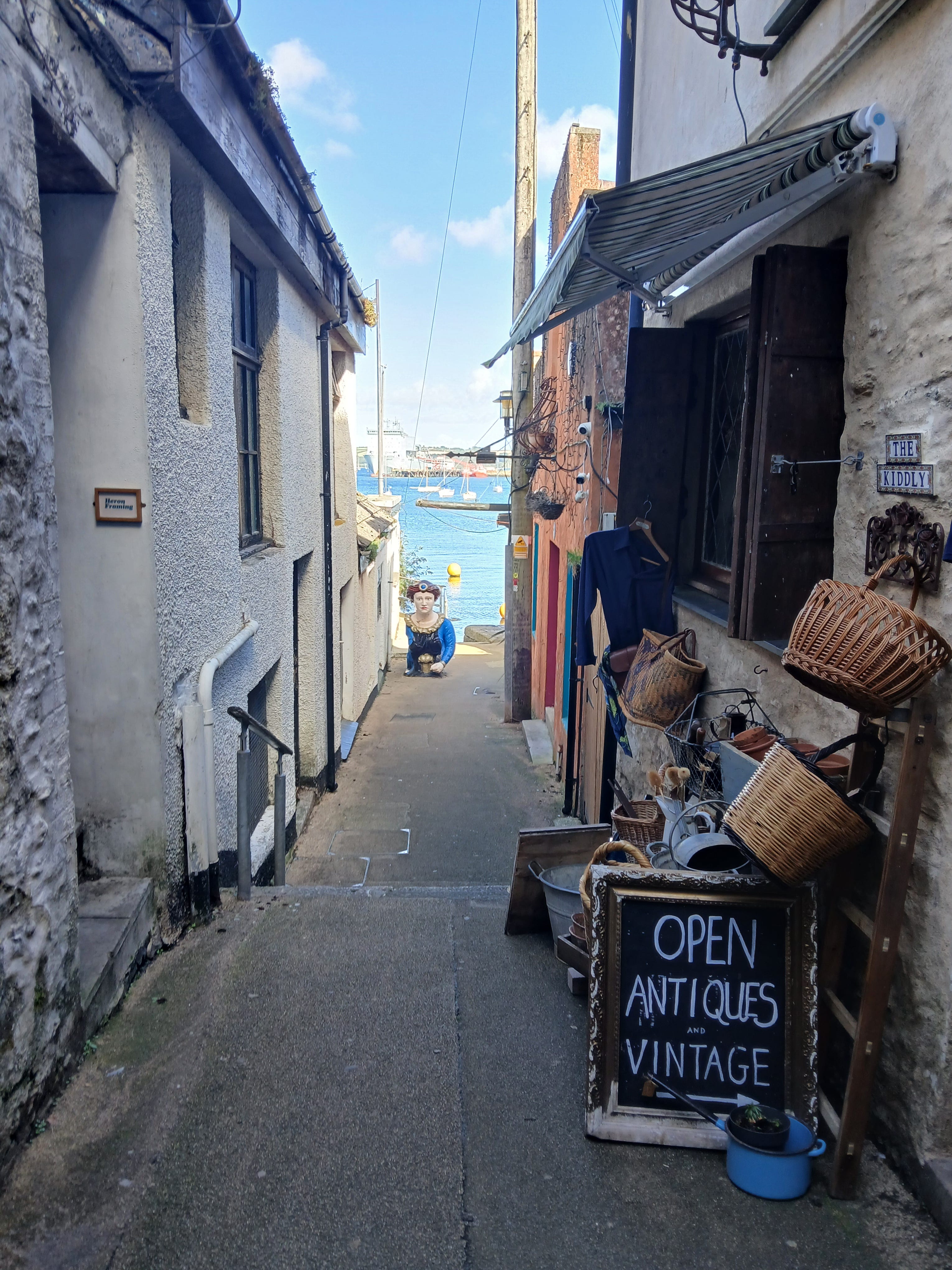
MacBeth lives in Cornwall and there were several references to Falmouth and nearby places like Penryn. Earlier I had come across a ship’s figurehead in one of the lanes, and then I found mention of her in the book. Her name is Ami. She was washed ashore from the shipwreck of the Amazon in 1852 and repurposed as a shop-sign (a common use for salvaged figureheads).
MacBeth tells us early on in that she comes from a family of collectors and archivists. This emotional connection explains why she folds the act of collecting itself into her idea of folk practice. She challenges the notion of separation between a collector and the ‘observed’ community, and the hierarchy this implied historically. In the past, folklorists often allowed their own projections or ideas of respectability to codify, misinterpret, or sanitise folk at one remove (this probably still happens). By comparison, Lost Folk stresses the possibility of being both archivist and participant. But the emphasis on making records in response to precarity and loss sometimes made me feel that the cultural forms we are being encouraged to preserve were subordinate to the heroism of the scholars and enthusiasts. Despite this, the book is filled with fun stories of irreverent and grounded creativity, as well as strong arguments against those who claim that tradition justifies the continuation of racist, misogynistic or homophobic practices.
There is an interesting tension at the heart of the book. Macbeth is so anxious to treasure folk’s material culture but is at pains to acknowledge that its great appeal lies in a fleetingness and a vulnerability that the impulse to archive cannot quite mask. Despite being bound up with the past, folk dwells with living people and their relationships: their memories, their hands and their labour, and the time given over to what they share with each other.
This post has gone out much later than intended but I hope you enjoyed reading! I hope to be posting more regularly here again very soon.